
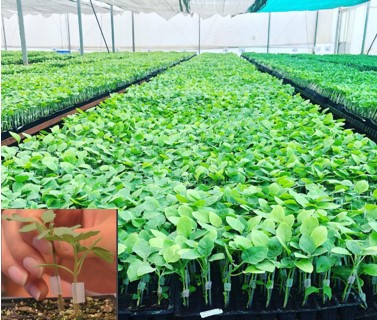
Vegetable grafting—combining a high-yielding scion with a disease-resistant rootstock—is no longer just a traditional technique. It is emerging as a climate-smart tool that offers both ecological benefits and commercial returns for entrepreneurs. The business logic is clear: grafted seedlings cost more than ordinary seedlings, but the savings from reduced pesticide use, higher yields, and extended harvest periods downstream more than cover the premium.
Why It Matters
Grafting is well established in tomato, eggplant, chilli, cucumber, and watermelon, with value on three fronts:
- Disease resistance and reduced chemical use. Rootstocks resist soil-borne diseases like bacterial wilt, fusarium, and root-knot nematodes. Indian farmer Gaurav Maurya, using eggplant grafted onto Solanum torvum, overcame wilt and nematode damage and earned Rs. 2.27 lakh net in one season.
- In terms of market size, the penetration of grafted vegetables in protected cultivation continues to climb globally: about 48% of greenhouse tomatoes in Japan use grafted seedlings, and greenhouse chilli grafting is also rising quickly in South Korea. By contrast, grafting technology in emerging markets like India remains “underutilized”—and that gap is precisely the first-mover opportunity for entrepreneurs.
- Stress adaptation. Grafted plants tolerate salinity, waterlogging, and low temperatures—vital as climate change intensifies.
The Entrepreneurial Opportunity
The real business lies in commercial production of grafted seedlings. Aruj Nursery, northern India’s first specialized grafted vegetable nursery, distributed nearly 100,000 seedlings free in 2021 to build trust, then went commercial in 2022. Many entrepreneurs especially in Chhattisgarh have established commercial units for the production of grafted vegetable seedlings but the demand is too high as such offers scope for agri- entrepreneurship in it.
Policy support is growing: India’s MIDH and several state programs subsidize grafted seedlings, with some states offering Rs. 30,000 per demonstration farmer. The emerging markets for grafted vegetable seedlings in India remain underutilized—a clear first-mover advantage.
Building the Skills
For those looking to enter this space in agri-entrepreneurship in vegetable grafting, IHT, Greater Noida provides training for a vegetable grafting course with practical exposure through hands-on training—an ideal starting point for aspiring entrepreneurs. The course combines expert led classroom session with practical, hands on training enabling participants to develop the expertise required to establish, manage or a expand a Commercial grafting enterprise.
The course covers post grafting entrepreneurship like cost of production per seedling, pricing, profit margins, break even, business models, marketing & nursery licensing/registration overview.
Enquire now Phone +91-8130997511 Email: enquiry@iht.edu.in

Leave A Comment