

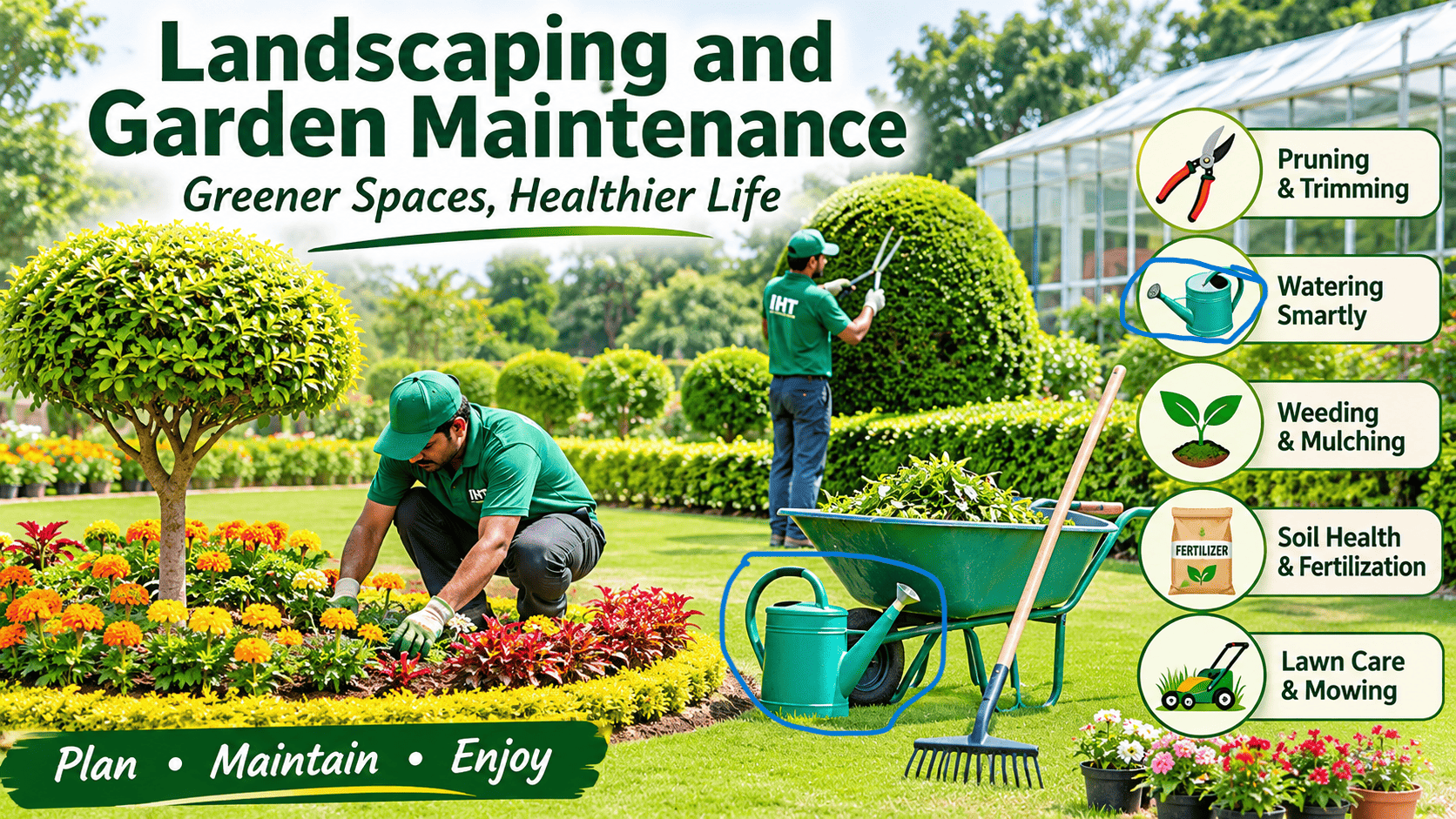
आज के समय में पूरी दुनिया में लैंडस्केप हॉर्टिकल्चर (Landscaping) के महत्व को सभी लोग समझने लगे हैं। उद्यान शरीर और मन को ताजगी प्रदान करके लोगों के मनोरंजन और सार्वजनिक विश्राम का साधन बनते हैं। वास्तव में, उद्यान सार्वजनिक जीवन के कठोर तनाव और व्यस्तताओं से लोगों को राहत और विश्राम प्रदान करने वाले स्थान होते हैं।
लैंडस्केप हॉर्टिकल्चर का उद्देश्य लॉन, वृक्षों और झाड़ियों आदि का रोपण करके एक प्राकृतिक दृश्य का निर्माण करना है। यह उद्यान में प्रकृति की नकल प्रस्तुत करने की कला है तथा लोगों के संपूर्ण जीवन-पर्यावरण को बेहतर बनाने में सहायता करती है। हम एक विशाल ग्रह पर रहते हैं, जहाँ विभिन्न भौगोलिक एवं कृषि-जलवायु परिस्थितियों के अनुसार अलग-अलग प्रकार के प्राकृतिक लैंडस्केप पाए जाते हैं। पर्वत, पहाड़ियाँ, घाटियाँ, संकरी घाटियाँ, समुद्र, नदियाँ, वन, मैदान, रेगिस्तान, झीलें, दलदली क्षेत्र, जलधाराएँ आदि प्राकृतिक लैंडस्केप के प्रमुख भाग हैं। मनुष्य ने इन प्राकृतिक तत्वों से प्रेरणा लेकर अपने आसपास के लैंडस्केप को सुंदर बनाया और कुछ क्षेत्रों को अपने आनंद एवं मनोरंजन के लिए उद्यानों के रूप में विकसित किया है।
मूलभूत सिद्धांत (Basic Principles)
वास्तव में मास्टर प्लान (Master Plan) तैयार करने से पहले, विशेष रूप से उद्यान ( Landscaping) के लिए निम्नलिखित बातों को ध्यान में रखना चाहिए।
(a) पृष्ठभूमि (Background):
उद्यान की पृष्ठभूमि, चाहे वह दीवार हो, ऊँचे वृक्ष हों या हेज (Hedge), प्रकृति में तटस्थ (Neutral) होनी चाहिए। अर्थात् पृष्ठभूमि ऐसी नहीं होनी चाहिए कि वह उद्यान की मुख्य विशेषताओं से ध्यान भटकाने लगे।
(b) विरोधाभास/विपरीतता (Contrast):
डिजाइन ऐसा होना चाहिए जिससे एकरूपता (Monotony) समाप्त हो। इसके लिए पौधों के आकार, बनावट (Texture) या रंग में विविधता एवं विरोधाभास लाना आवश्यक है।
(c) संतुलन या अनुपात (Balance or Proportion):
उद्यान के विभिन्न घटकों जैसे पौधों के समूह (Masses), आकार-रूप (Forms), रंग आदि के बीच उचित संतुलन बनाए रखना चाहिए। औपचारिक उद्यान (Formal Garden) में यह संतुलन समान मात्रा या समान प्रकार की वस्तुओं द्वारा प्राप्त किया जाता है, जबकि अनौपचारिक उद्यान (Informal Garden) में बड़े, तटस्थ रंग वाले समूह के सामने छोटे रंगीन पौधों का समूह लगाकर संतुलन बनाया जा सकता है। पौधों या अन्य उद्यान तत्वों की अत्यधिक भीड़ से बचना चाहिए।
(d) खुला मध्य भाग (Open Centre):
उद्यान के मध्य क्षेत्र को किसी प्रमुख आकर्षण वाली वस्तु से खाली रखना चाहिए। इसे प्राप्त करने का सबसे अच्छा तरीका लॉन बनाना है, जो संपत्ति को अधिक विस्तृत और खुला दिखाई देने का प्रभाव देता है। लॉन के बीच में कोई विशेष झाड़ी (Specimen Shrub) लगाना उचित नहीं है, क्योंकि इससे खुलेपन और विशालता का सिद्धांत प्रभावित होता है। हालांकि, ऐसा वृक्ष लगाया जा सकता है जिसकी शाखाएँ जमीन से कुछ ऊँचाई पर फैलती हों।
(e) पुनरावृत्ति (Repetition):
उद्यान की कुछ विशेषताओं या तत्वों को दोहराने से लय (Rhythm), संतुलन (Balance) और एकरूपता/एकता (Unity) प्राप्त करने में सहायता मिलती है। औपचारिक उद्यान में सामान्यतः एक ही प्रकार के तत्व को दोहराया जाता है। लेकिन अनौपचारिक उद्यान में ऐसा आवश्यक नहीं है। इसमें बनावट, आकार या मात्रा को बदले बिना केवल रंग के स्वर (Colour Tone) को दोहराया जा सकता है। उदाहरण के लिए, यदि उद्यान में गोलाकार पथ (Circular Path) है, तो उसके अनुरूप लगातार दो या तीन गोलाकार क्यारियाँ बनाई जा सकती हैं, जिनमें मौसमी फूल, हेज और झाड़ियों की सीमाएँ लगाई जा सकती हैं। इस प्रकार आकार की पुनरावृत्ति होने के बावजूद बनावट, रंग और आकार-रूप में विविधता होने के कारण डिजाइन नीरस नहीं दिखाई देता।
(f) लय (Rhythm):
एक लैंडस्केप डिजाइनर में यह समझने की कलात्मक क्षमता होनी चाहिए कि डिजाइन में लय कैसे उत्पन्न की जाए। विभिन्न तत्वों को बिना किसी योजना और सामंजस्य के इधर-उधर व्यवस्थित करने से सुंदरता में वृद्धि नहीं होती। सामंजस्यपूर्ण रेखाएँ, विशेषकर कलात्मक रूप से बनाई गई घुमावदार रेखाएँ, लैंडस्केप में लय उत्पन्न करती हैं। किसी रॉकरी (Rockery) के सामने झाड़ियों का समूह लगाने से लय बाधित हो सकती है। आकार-रूप जैसे कुछ तत्वों की पुनरावृत्ति करने से लय और अधिक प्रभावशाली होती है।
(g) विविधता (Variety):
उद्यान की एकरसता को समाप्त करने के लिए विविधता आवश्यक है। यह रंग, आकार-रूप और बनावट में विरोधाभास के माध्यम से प्राप्त की जाती है। केवल अलग-अलग मौसमी फूलों को एक ही लाल रंग में लगाने से आवश्यक रूप से विविधता उत्पन्न नहीं होती।
इनके अतिरिक्त, उद्यान का डिजाइन सरल, रखरखाव में आसान और उसमें रहने वाले लोगों के लिए आरामदायक एवं सुविधाजनक होना चाहिए।
IHT के ‘लैंडस्केप और गार्डन मेंटेनेंस‘ (Landscape and Garden Maintenance) से जुड़े व्यापक प्रशिक्षण कार्यक्रम में दाखिला लेकर, आप अपने सपनों को एक सफल लैंडस्केप व्यवसाय में बदल सकते हैं। जो लोग आय का एक स्थायी स्रोत तलाश रहे हैं, उनके लिए ‘लैंडस्केप और गार्डन मेंटेनेंस‘ का क्षेत्र सफलता की ओर ले जाने वाला एक बेहतरीन रास्ता साबित हो सकता है।
हमसे संपर्क करें:
टेलीफोन: +91-11-46604988 फ़ोन: +91-8130997511
ईमेल: enquiry@iht.edu.in
The Principles of Landscape Horticulture: Creating Beautiful, Functional Outdoor Spaces
In today’s world, people everywhere are beginning to understand the importance of landscape horticulture. Gardens refresh both body and mind, serving as a source of entertainment and public relaxation. In truth, gardens are spaces that offer relief and rest from the harsh stresses and busyness of public life.
What Is Landscape Horticulture?
The purpose of landscape horticulture is to create a natural scene by planting lawns, trees, and shrubs. It is the art of presenting a imitation of nature within a garden, and it helps improve the entire living environment of people. We live on a vast planet where different types of natural landscapes are found according to various geographical and agro-climatic conditions. Mountains, hills, valleys, narrow gorges, seas, rivers, forests, plains, deserts, lakes, marshy areas, and streams are all major parts of natural landscapes. Drawing inspiration from these natural elements, humans have beautified the landscapes around them and developed certain areas as gardens for their enjoyment and recreation.
Basic Principles of Landscaping
Before preparing a master plan—especially for landscaping—the following points should be kept in mind:
(a) Background
The background of the garden—whether it is a wall, tall trees, or a hedge—should be neutral in nature. In other words, the background should not be such that it distracts attention from the main features of the garden.
(b) Contrast
The design should be such that monotony is eliminated. For this, it is necessary to bring diversity and contrast to the size, texture, or color of plants.
(c) Balance or Proportion
A proper balance should be maintained among the various components of the garden, such as masses of plants, forms, and colors. In a formal garden, this balance is achieved through equal quantities or similar types of objects, whereas in an informal garden, balance can be created by placing a small group of colorful plants in front of a larger, neutral-colored group. Excessive crowding of plants or other garden elements should be avoided.
(d) Open Centre
The central area of the garden should be kept free of any major attraction. The best way to achieve this is by creating a lawn, which gives the impression that the property is more expansive and open. Placing a specimen shrub in the middle of the lawn is not advisable, as it affects the principle of openness and vastness. However, a tree whose branches spread some height above the ground can be planted.
(e) Repetition
Repeating certain features or elements of the garden helps achieve rhythm, balance, and unity. In a formal garden, the same type of element is generally repeated. But in an informal garden, this is not necessary. Here, only the color tone can be repeated without changing texture, size, or quantity. For example, if the garden has a circular path, two or three circular flowerbeds can be created in keeping with it, planted with seasonal flowers, hedges, and shrub borders. Thus, despite the repetition of shape, the design does not appear monotonous because of the diversity in texture, color, and form.
(f) Rhythm
A landscape designer must have the artistic ability to understand how to create rhythm in a design. Arranging various elements here and there without any planning and harmony does not enhance beauty. Harmonious lines—especially artistically created curved lines—generate rhythm in a landscape. Placing a group of shrubs in front of a rockery can disrupt the rhythm. Repeating certain elements such as form makes the rhythm even more impactful.
(g) Variety
Variety is essential to eliminate the monotony of a garden. It is achieved through contrast in colour, form, and texture. Planting only different seasonal flowers in the same red colour does not necessarily create the required variety.
In addition to these, the garden design should be simple, easy to maintain, and comfortable and convenient for the people who live in it.
Turn Your Passion into a Profession
By enrolling in IHT’s comprehensive training program on Landscape and Garden Maintenance, you can transform your dreams into a successful landscaping business. For those seeking a stable source of income, the field of landscape and garden maintenance can prove to be an excellent path toward success.
Contact Us
- Telephone: +91-11-46604988
- Phone: +91-8130997511
- Email: enquiry@iht.edu.i


Leave A Comment