Weeds are unwanted plants that grow in cultivated areas and are often interfering with the growth and productivity of desired crops. They have rapid growth rates, aggressive reproduction strategies and a high tolerance for adverse environmental conditions. Weeds compete with horticultural plants for space, water and nutrients, which can weaken crops and reduce their ability to produce flowers or vegetables.

School of Speed Breeding (SoSB), One of the biggest challenges in plant breeding is the time it takes to develop pure, homozygous lines. Normally, this requires 4 to 6 generations of self-pollination, which can take several years. The long vegetative period of plants and dormancy in seeds add more delay. To overcome this and reduce generation time, breeders have used
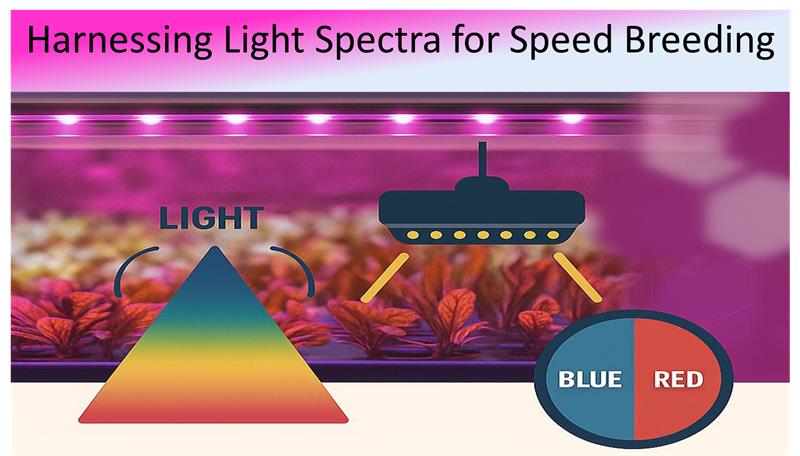
School of Speed Breeding (SoSB), In speed breeding, light is more than illumination, It is a precision tool for accelerating crop innovation. By combining LED-based strategies with photoperiod control, it is shaping the next generation of high-yielding, resilient crops development. While growth chambers and controlled environments are essential, one of the most transformative tools in accelerating crop development is light
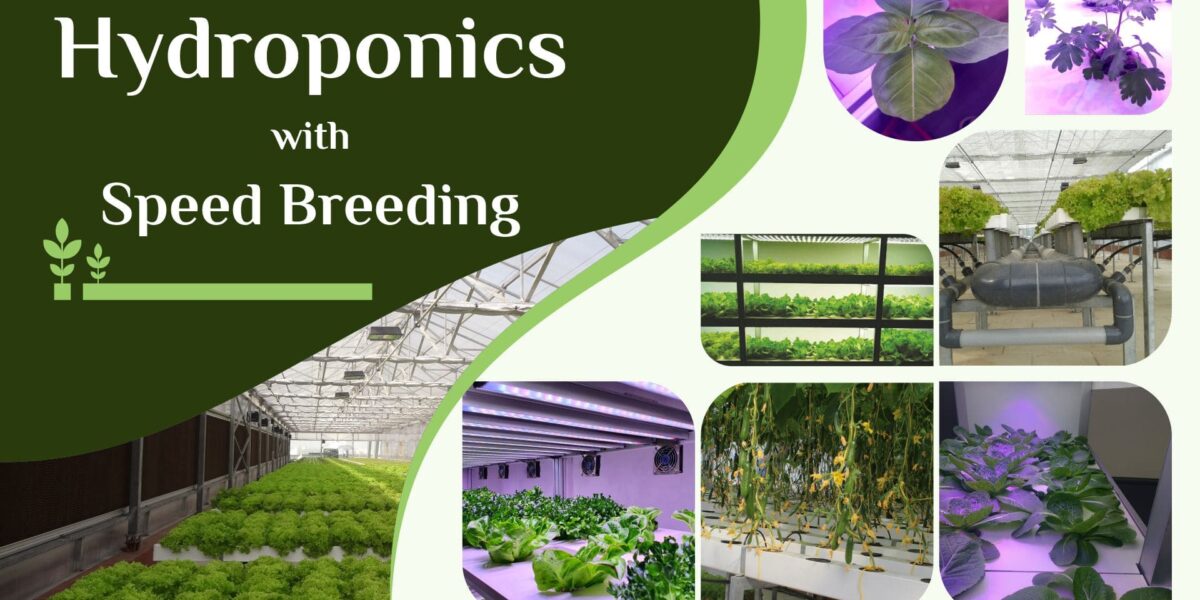
School of Speed Breeding (SoSB), Why Hydroponics + Speed Breeding? Hydroponics allows plants to grow without soil, using nutrient-rich water. This gives complete control over nutrients, water, and light. Speed breeding uses longer photoperiods and controlled environments to shorten the time from seed to seed. Together, hydroponics and speed breeding create the perfect conditions for plants to grow faster, healthier,

School of Speed Breeding (SoSB), Speed breeding isn’t just a method, it’s a catalyst for change in the way we grow, improve, and sustain vegetable crops in the decades to come. Vegetable breeding has entered a new era where the time from initial cross to market-ready variety can be dramatically reduced. Across worldwide, speed breeding is proving to be more